
Pest control websites for urgent calls and year-round plans
Pest control customers come in two moods. Some found mice in the kitchen or bed bugs in the guest room and want someone today. Others want ants and spiders kept out all year, or a termite inspection before they buy a house. Your website has to serve both: a call button for the urgent ones and clear plans for the rest.
Here's what a pest control company's site needs, the Google categories that fit, and what to watch in your ads.
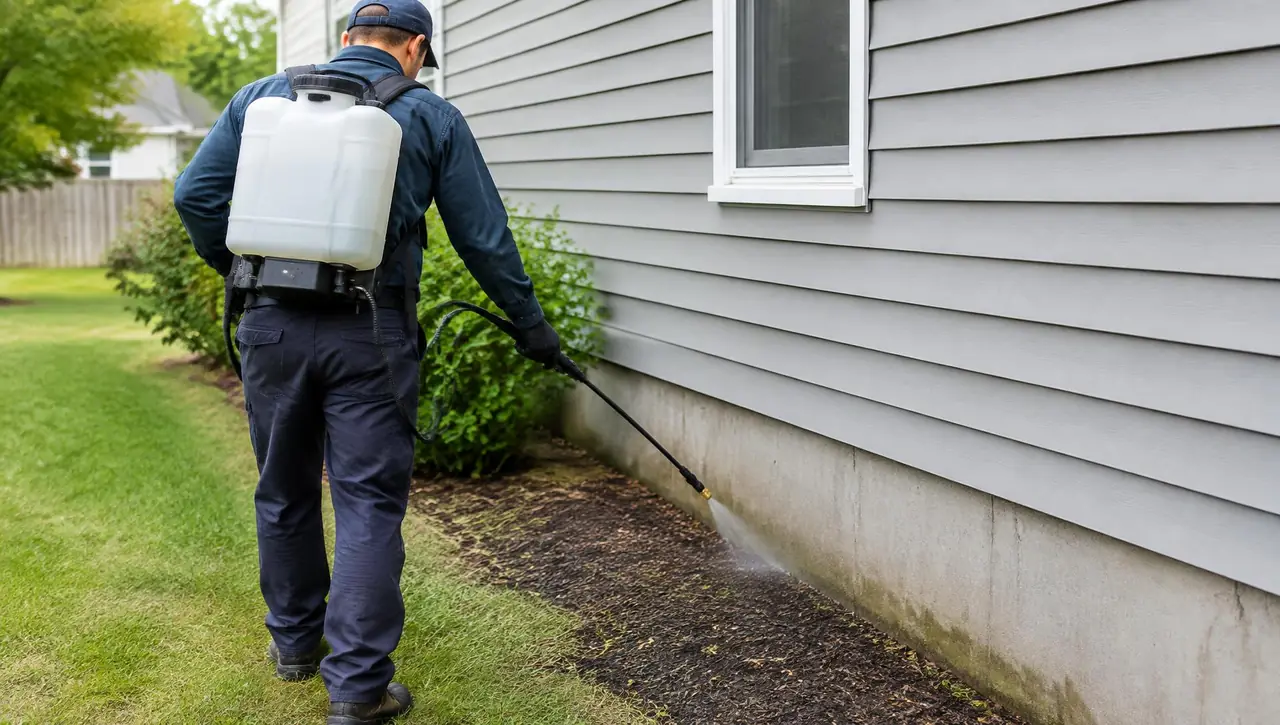
Make the urgent call easy
Someone with rats in the attic isn't reading a long page. Put a tap-to-call button on every screen, say plainly whether you offer same-day or next-day visits and when you answer after hours, and keep the form to name, phone, address and what they're seeing. Wasps, bed bugs, rodents and wildlife each get their own page, because people search for the pest, not for "pest control services".
Explain the service plan
Recurring plans are what make a pest control company steady. Explain how yours works: the first visit, the regular treatments, which pests are covered, and whether you come back between visits if pests return. Give a starting price if you can, and say what isn't covered, such as termites or wildlife.
Termites get their own page
Termite work is its own search and its own buyer. Cover inspections, the treatment types you use and ongoing protection if you offer it. Add a section on inspections for home sales: lenders often ask for a wood-destroying insect report (the NPMA-33 form), especially on VA and FHA loans, and only a licensed pest control company can complete it. If you do them, say how quickly you turn them around and give real estate agents a direct way to order one.
Licenses, labels and the safety question
Show your state license or certification number on every page footer and your insurance on the about page. The EPA notes that many state agencies require certification for any commercial pesticide use, so make the number easy to find.
Parents and pet owners will ask whether the treatment is safe. Answer with what you actually do: which areas you treat, how long to stay off treated surfaces according to the product label, what you use indoors. Avoid promising "safe", "harmless" or "non-toxic": federal pesticide labeling rules list those words as false or misleading safety claims.
Photos for a trade nobody wants to look at
Nobody wants a gallery of roaches. Show the work instead: a tech in uniform at the door, the flashlight inspection in a crawl space, termite mud tubes found and the treated area after, gaps sealed in a rodent exclusion job, bait stations placed neatly along a wall. For bed bug work, say whether you can come in an unmarked vehicle; those customers care about discretion.
Google profile and seasonal ads
Use Pest control service as the primary category. Add Animal control service if you remove wildlife and Bird control service if you handle birds. People type "exterminator", "termite inspection" and "mosquito spraying", but none of those is a category in Google's list, so those words belong in your services and on your pages (Google Business Profile guide).
On Facebook, pest control isn't named in Meta's Housing category, so we don't declare it by default. The exception is an ad about repairing termite damage to a home, which is housing repair work: when Meta asks the special ad category question in campaign setup, answer it for that ad. Plan ads around the season's pests: termite swarms and ants in spring, mosquitoes and wasps in summer, rodents moving indoors in fall. See the Facebook ads guide.
The pest control services we put on your site
Each service gets its own page, written around your work and your towns.
Primary category: Pest control service. Also worth adding where they fit your work: Animal control service, Bird control service.
We target the towns you serve and show your real work. Meta asks in campaign setup whether a special ad category applies, and we answer it for your trade.
Questions
When the problem is solved: after the follow-up visit, once the mice are gone or the bed bugs are cleared. Ask every customer the same way, with your link or QR card, and never offer anything in return. Our review guide has the wording.
Only where you have real local content, like the pests and seasons that hit that area or the jobs you've done there. Copies of one page with the town name swapped are doorway pages under Google's spam policies. Start with one page per pest and service; local SEO for contractors has the details.
Yes. Fill in the form to get started, send your license number, services and photos by text or email, and the site is live in 48 hours, month to month.
All of it for $297/mo
No contract · no sales call · live in 48 hours
- A website that gets calls. Fast and built for phones: your services, your photos, a one-tap call button and a quote form. Every request goes straight to you.
- Your own domain. yourcompany.com, included. It's registered to your business and stays yours.
- Hosting & care. Online 24/7 with SSL and backups. We keep it running. No extra bill.
- Google reviews system. Your review link, a QR code and printable cards. Ask every customer with one tap.
- Local SEO. A page for every service and every town you serve, built around what homeowners type into Google.
- Google Business Profile optimization. We optimize your Maps profile: website link, categories, services, hours and photos. The profile itself is free from Google.
- $100/mo of Facebook & Instagram ads. Included in the $297. We run the campaign in your area and every lead hits your phone in seconds.
The $100 of ads is part of the $297. We don't promise a number of leads: every month you see what was spent and what it brought.
Get started in 30 secondsOther trades
Guides
Sources
- Meta Business Help Center: How to choose a special ad category (Housing definition)
- Google Business Profile Help: Guidelines for representing your business on Google
- Google Business Profile categories, complete list 2026 (Dalton Luka)
- Google Search Central: Spam policies (doorway abuse)
- Google Maps user contributed content policy: Fake engagement
- US EPA: Certification Standards for Pesticide Applicators
- Cornell LII: 40 CFR 156.10, pesticide labeling (false or misleading safety claims)
- Colonial Pest Control: Pest inspections for real estate transactions (NPMA-33, VA and FHA)